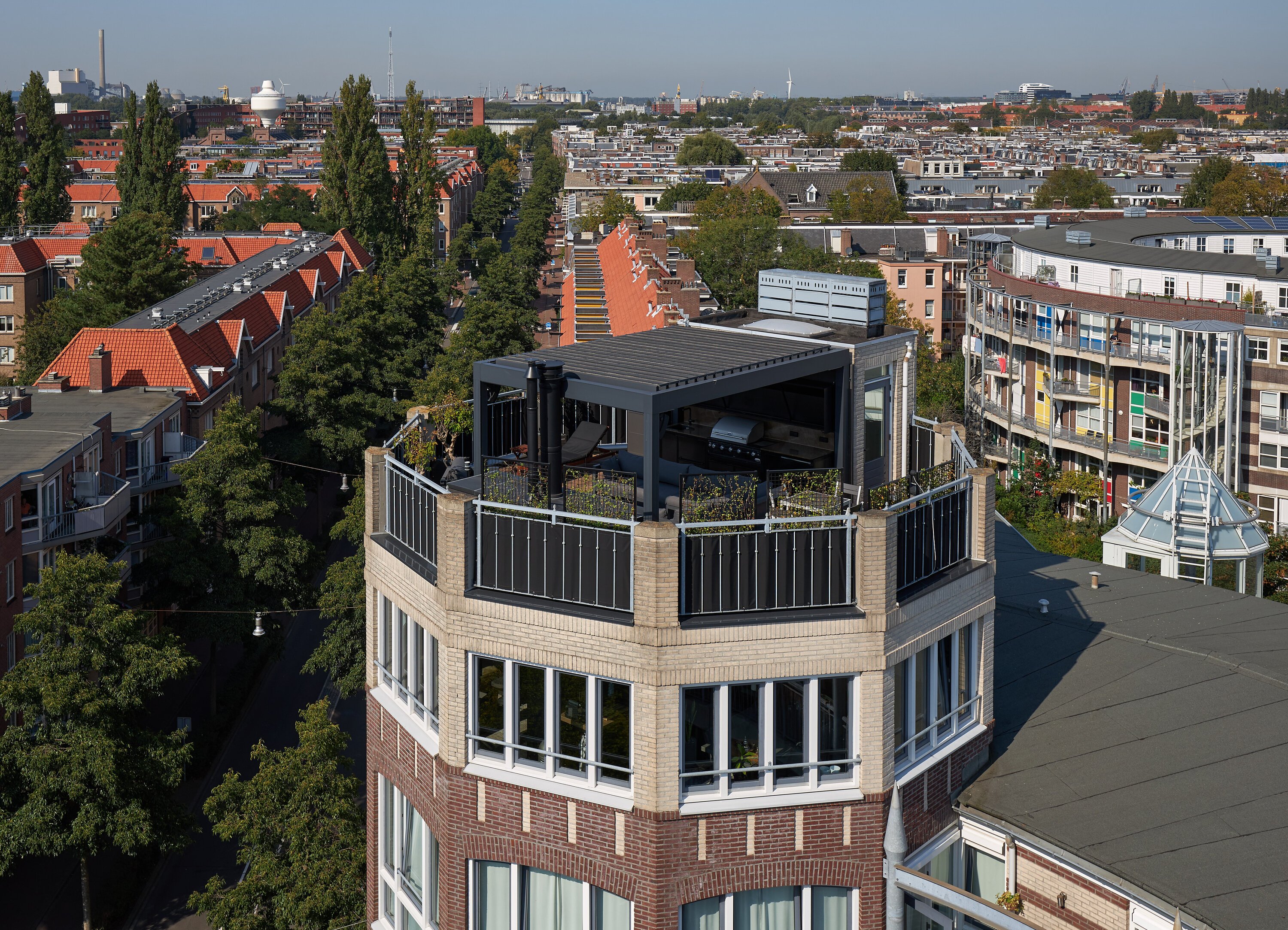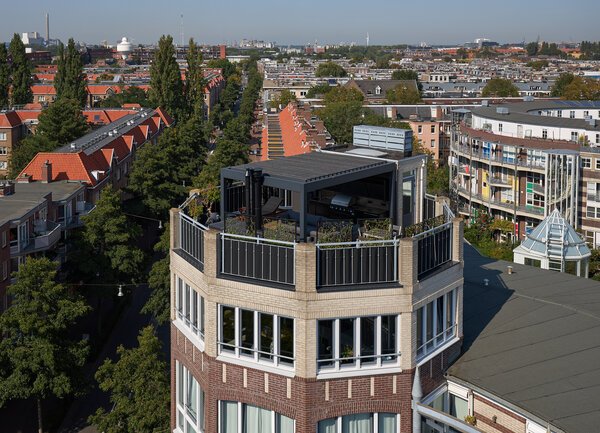
For Den Haan Bouw, I photographed a penthouse with a rooftop terrace in Amsterdam. Initially, the idea was to capture an image of the terrace using a drone, with the city as its backdrop. In this way, the surroundings become a powerful visual context within the photograph.
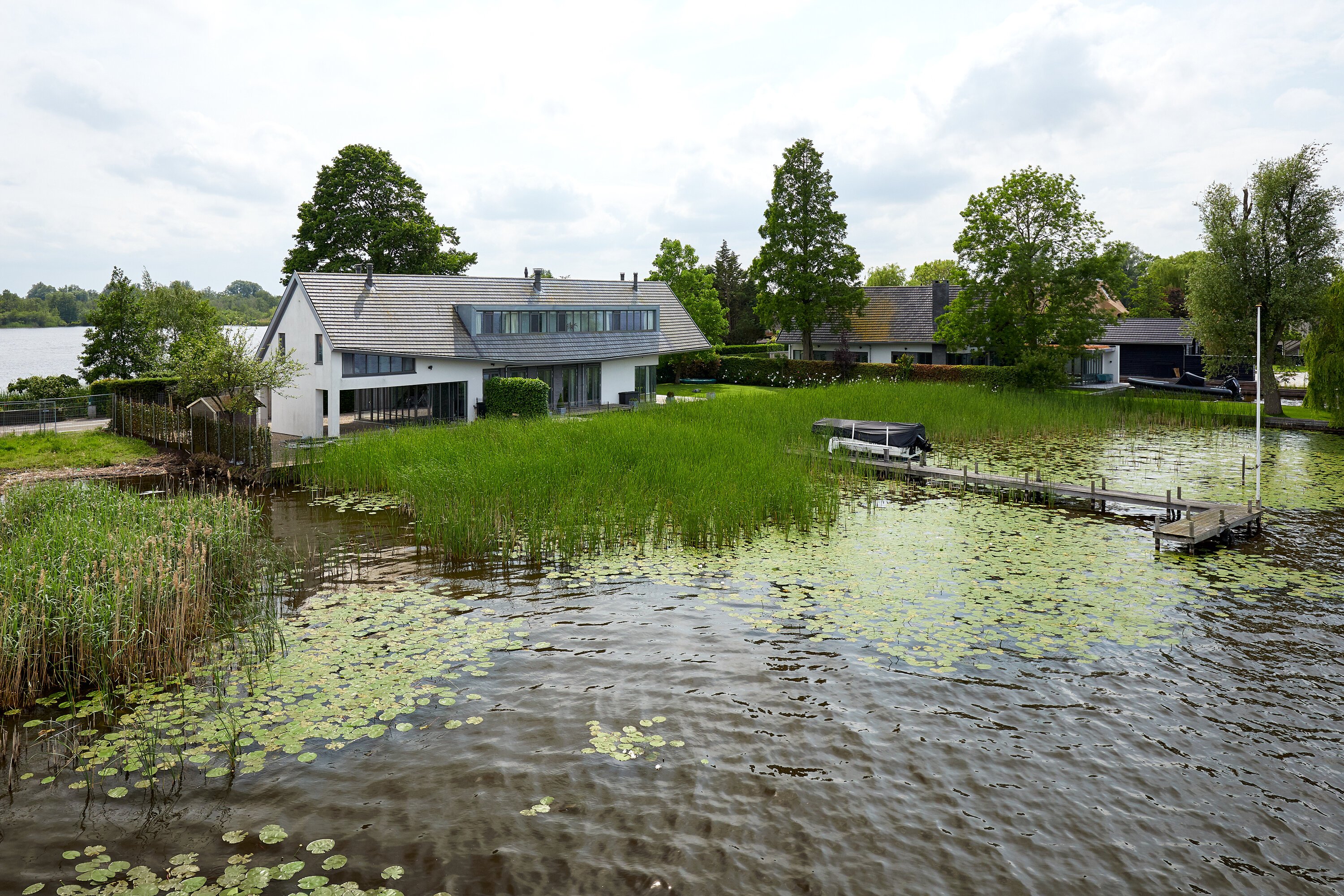
Think of a privately situated home or a beautiful waterfront villa. Architects design these residences with careful consideration for their immediate surroundings. An exterior photograph taken from ground level does not always convey the strongest relationship between the property and its environment. Fortunately, I can gain height.
Today’s drones are significantly smaller and lighter than they were in 2012. On December 31 this year, new European regulations regarding drones will come into effect. Unfortunately, it remains prohibited to fly drones within controlled airspaces (CTRs).
In Amsterdam and other CTR areas in the Netherlands, flying a drone is not permitted. Although there are still people who believe it is possible, doing so is irresponsible — especially when you consider that there are reliable alternatives.
In 2014, I purchased a 10-meter mast from Photomast.com. I vividly remember picking it up with my brother. It barely fit into my small van. We drove home with mixed feelings, having just purchased the most expensive tripod I had ever invested in. Cost precedes benefit.
At home, I had a beautiful drone with eight powerful motors capable of lifting and operating my professional DSLR camera. However, I wanted to photograph locations where flying a drone was simply not allowed. As drones became increasingly widespread, so did regulatory restrictions and public nuisance.
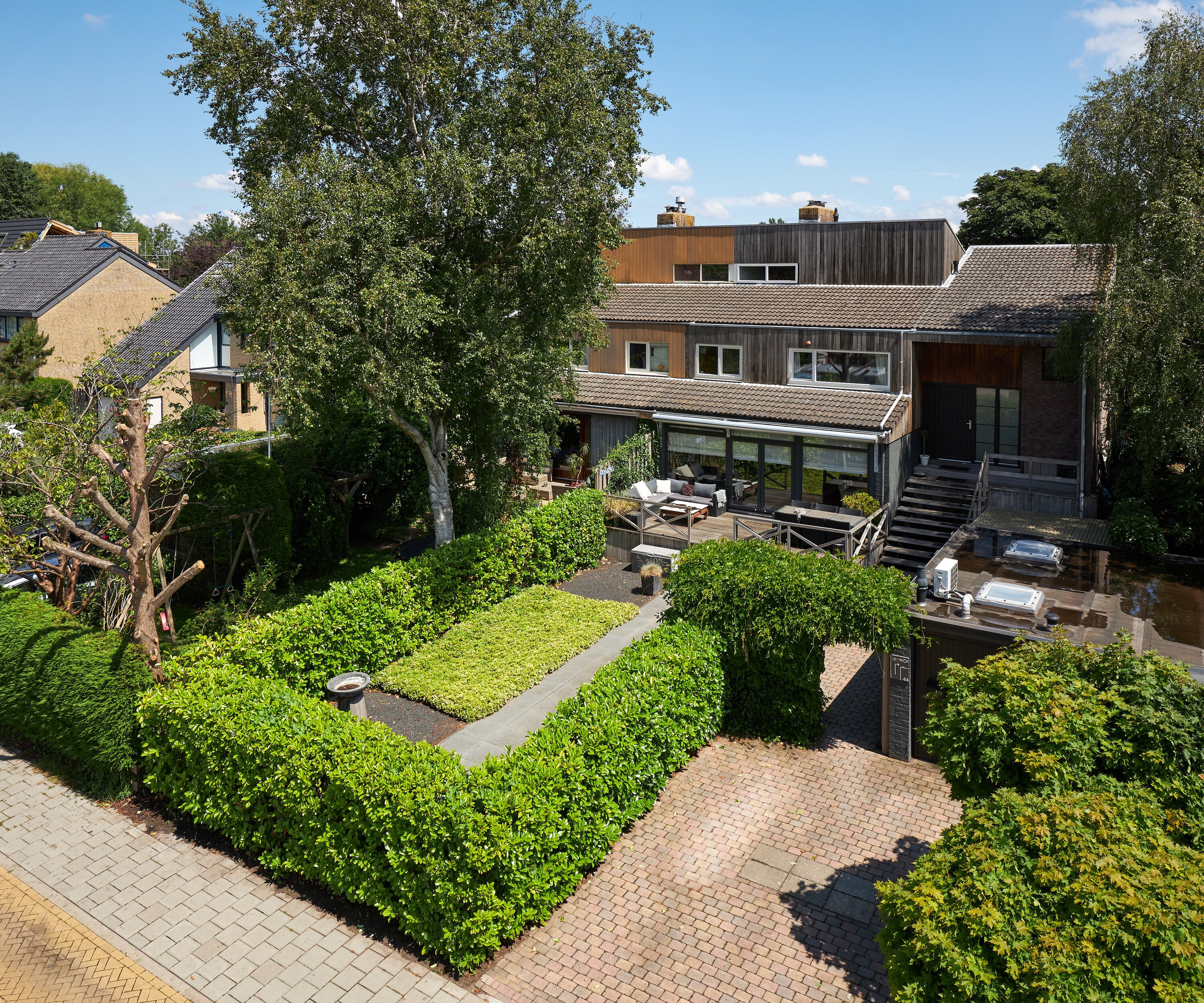
More often than I expected in 2014, I have thoroughly enjoyed working with the Photomast. I photograph exteriors using the mast, which extends up to 10 meters. But if you are positioned on stairs, a balcony, or another building, you can add those extra meters to your height advantage.
Over the years, I have captured many projects using this setup.
The penthouse I photographed for Den Haan Bouw was located in a building with two octagonal towers. Atop one of these towers was the penthouse that needed to be photographed.
We decided to approach the neighbors in the other tower and asked whether we could photograph the penthouse and rooftop terrace from their vantage point. The result speaks for itself. The camera was positioned on my mast at approximately 45 meters above ground.
If you didn’t know better, you might assume the image was captured using a drone.
More than once, I have found myself standing in places I could not have imagined back in 2014. I distinctly remember standing in a real estate agent’s small boat to photograph a waterfront villa. Extending the mast up to 10 meters while the boat gently rocked on the water.
From the shore, it must have looked unusual. Someone even shouted that he owned a drone and that the real estate agent could have simply asked him. Regulations did not seem relevant from that perspective. Fortunately, the agent understood the difference.
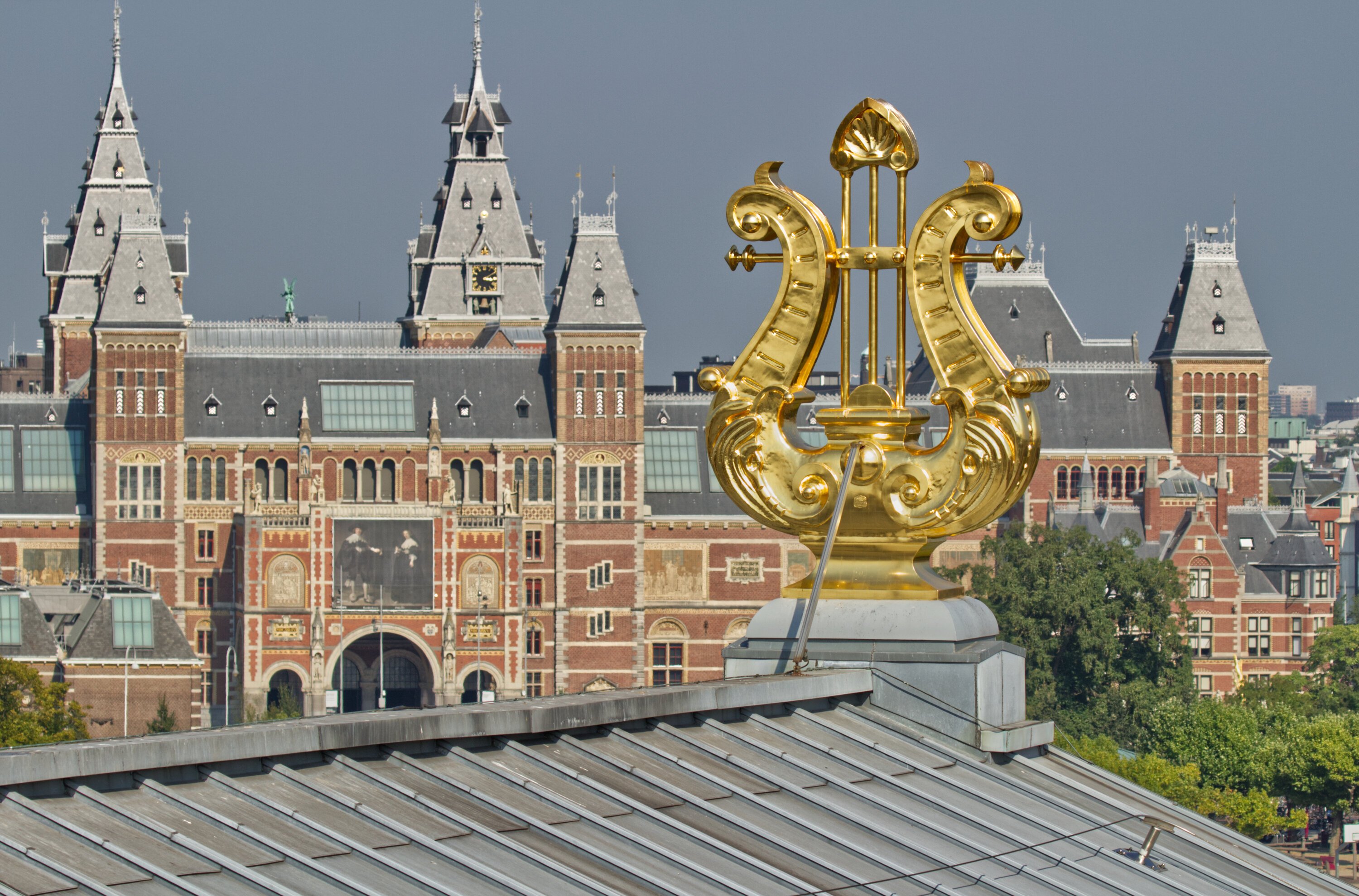
That low-aerial photography or height photography using a mast, can be an excellent alternative for specific assignments was also recognized by the creative team of musical duo Yentl en de Boer in 2016.
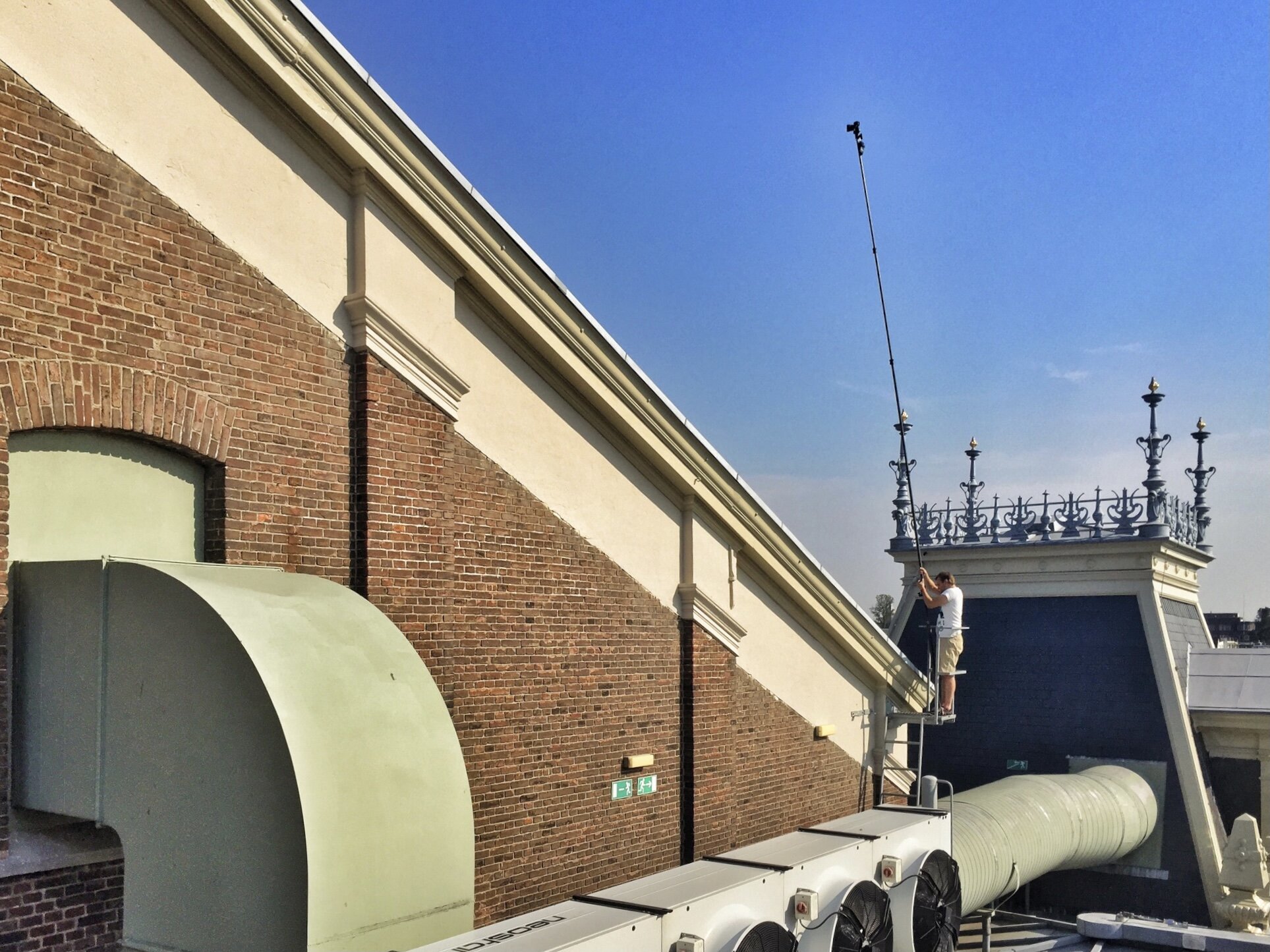
There was a strong concept, but execution stalled because flying a drone was not permitted. They wanted an image of the golden harp at the ridge of the Concertgebouw for their new show. There was no access to the roof, so the photograph had to be taken from a distance.
The image was later edited and combined with photographs by photographer Mark David. The final result was built upon my height photograph, for which I was allowed to stand on a metal grid structure at the Concertgebouw.
It’s a project I look back on with great pleasure.